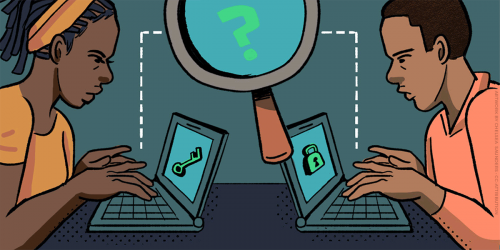
Internet shutdowns are devastating for human rights. We can’t rely on tech oligarchs to save us, especially when these same companies and governments are the ones to sever our access to the internet and telecommunications. This is why it's important to set up communication mechanisms before a disaster happens.
Last year, Canada's Bill C-2 was so bad it didn’t even make it to committee because of the backlash from the privacy community. Now, the spring’s worst sequel, Bill C-22, aka The Lawful Access Act, is trying it again.
EFF, along with the national ACLU, the ACLU affiliates in Maryland, North Carolina, South Carolina, and Virginia, and the National Association of Criminal Defense Lawyers (NACDL) filed an amicus brief in the U.S. Court of Appeals for the Fourth Circuit urging the court to require a warrant for border...
Deeplinks Blog by Electronic Frontier Foundation | May 11, 2026
The abrupt cancellation of RightsCon 2026—the world’s largest annual global digital rights conference—is not just a logistical disruption for thousands of participants—it is part of a growing global pattern of shrinking civic space and increasing hostility toward free expression and independent civil society.
The concerns driving this bill are real. Some AI systems have engaged in troubling interactions with vulnerable users, including minors. But the right answer to that is targeted enforcement against bad actors, and privacy laws that protect us all.
EFF friend Guy Kawasaki* has written a book: Everybody Has Something to Hide: Why and How to Use Signal to Preserve Your Privacy, Security, and Well-Being. This guide is now available in Spanish and English as an ebook in the EPUB format that you can download here. Take a look...
Last week, we released apkeep version 1.0.0, the latest edition of our command-line Android package downloading software. Rather than indicating major changes for the project, this milestone instead signifies arriving at a relatively stable and mature place after gradual iteration on the project over the course of over...
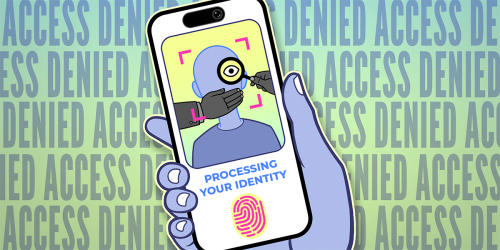
In the name of online safety, governments around the world are racing to impose a dangerous new system of control. Are age gates the silver bullet to the internet's problems they're being promoted as? Or are we being sold a bill of goods?
EFF joins 18 organizations in writing a letter to UK policymakers urging them to address the root causes of online harm—rather than undermining the open web through blunt restrictions.
EFF's spring membership drive ends this week! Join us today to defend privacy and free expression for all. Politicians will come and go, but you can help us claw the tools of oppression out of government hands.
Last September, the United Kingdom’s Prime Minister Keir Starmer announced plans to introduce a new digital ID scheme in the country. The scheme aims to make it easier for people to prove their identities by creating a virtual ID on personal devices with information like names, date of birth,...
For digital fairness to work, the European Union must focus on addressing the root causes of harm, not requiring platforms to exert more control over their users. This means safeguarding privacy, freedom of expression, and the rights of users and developers. The EU’s Digital Fairness Act must first prioritize privacy...
One of the central promises of open social media services is interoperability—the idea that wherever you personally decide to post doesn’t require others to be there just to follow what you have to say. Think of it like a radio broadcast: you want to reach people and don't care where...
Update, Sept. 17, 2026: Utah and Aylo agreed that the state will not enforce the new law against the company pending the Judge's ruling or until administrative rules setting specific compliance terms for adult sites are finalized. A proposed Utah rule establishing age-verification standards and VPN regulation remains open...